
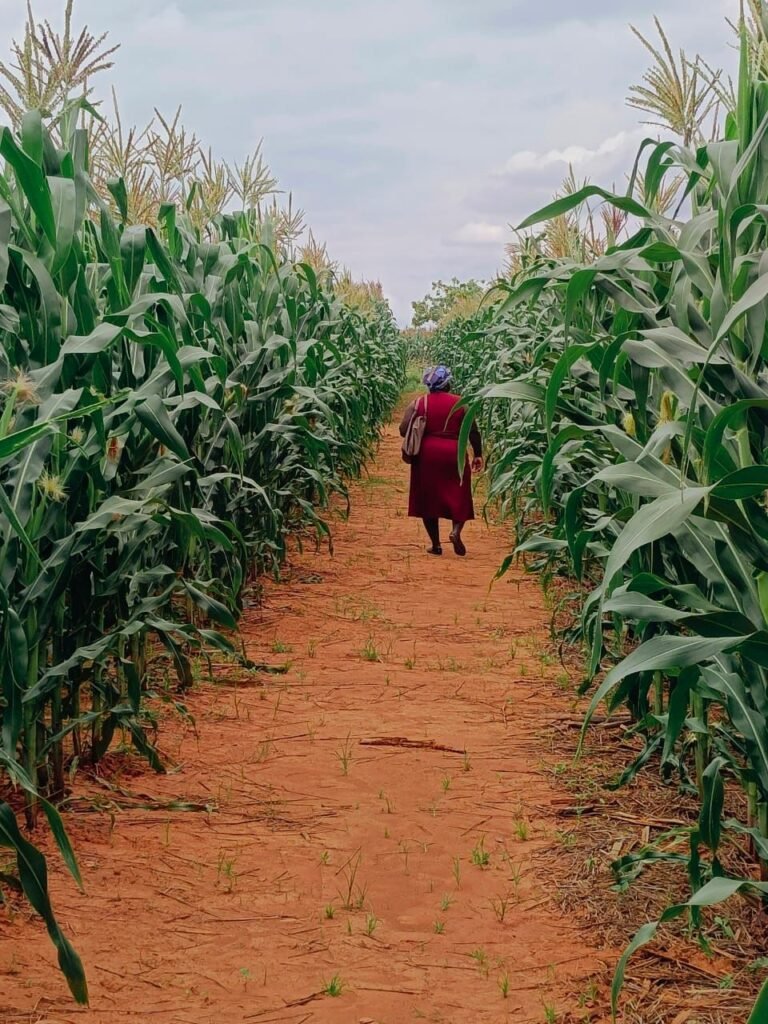
Zimbabwe is heading for a stronger harvest, with rising maize production and expanded winter cropping expected to strengthen national food security and rebuild strategic grain reserves.
According to the 28th Post-Cabinet Brief, maize production for the 2025/26 season is estimated at 2,685,021 metric tonnes, a 17.1% increase from 2,293,556 tonnes recorded in 2025. The improvement was supported by growth in both planted area and productivity. Maize hectarage rose by 8.2%, from 1,813,974 hectares to 1,963,292 hectares.
The stronger harvest is expected to leave Zimbabwe with a strategic grain surplus ranging between 550,945 and 964,945 tonnes. The projection varies according to monthly consumption assumptions of 10kg or 7kg per person. As of August 19, the Grain Marketing Board held 252,177 tonnes, while deliveries for the current marketing season were 126% higher than during the corresponding 2024/25 season. Mashonaland West alone contributed 50.1% of total intake.
Prospects for winter crops are equally encouraging. Wheat planting reached 106% of the national target, improving on the 101% achieved at the same stage in 2025. Farmers also planted 7,013 hectares of barley. Meanwhile, the country expects to harvest 243,850 tonnes of Irish potatoes from 9,000 hectares.
The outlook suggests that Government programmes under the Food Systems and Rural Transformation Strategy 2 are beginning to deliver measurable gains. Timely payment of farmers, however, will remain essential to sustaining confidence and financing the next production cycle. Cabinet said the GMB had cleared all outstanding payments from the 2024/25 season and established measures for prompt settlement this year.
Beyond grain, tobacco output remained strong, with 358.4 million kilogrammes sold by August 18. Although volumes increased by 1%, the average price fell from US$3.32 to US$2.49 per kilogramme, tempering growers’ gains.
Overall, the anticipated harvest provides a foundation for household food availability, agro-processing growth and reduced grain import dependence.