




Health Ministry says nearly 12,000 cases reported weekly, urges calm as vulnerable groups told to take precautions
By Maricho Reporter
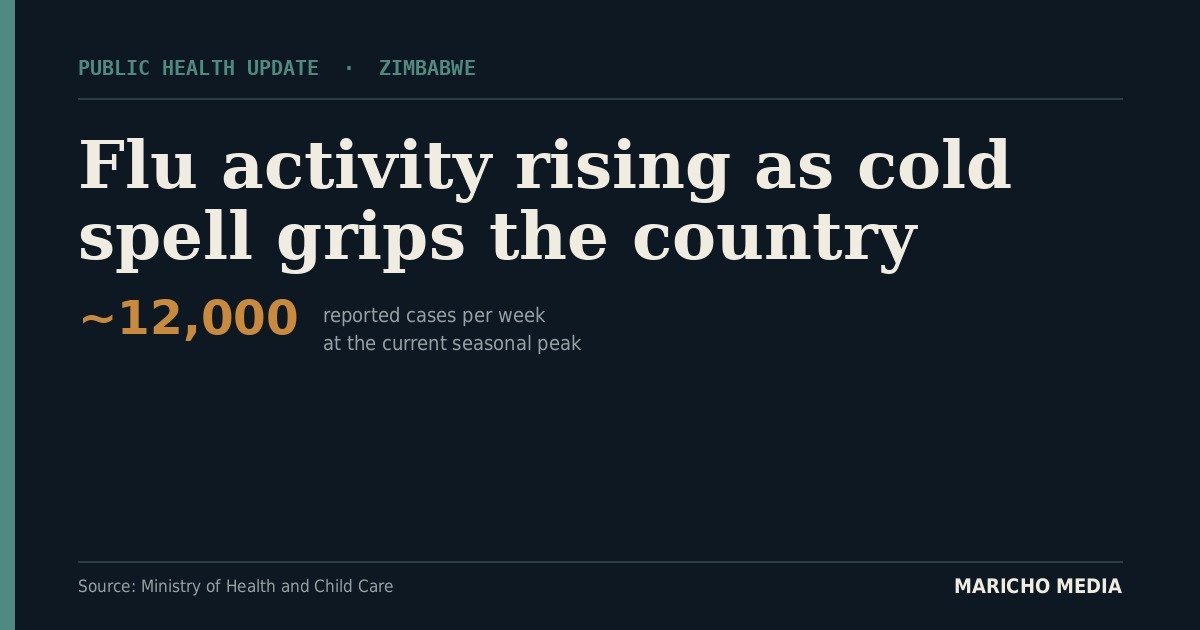
Zimbabwe is experiencing a seasonal influenza wave that has peaked later than usual this year, with the Ministry of Health and Child Care reporting almost 12,000 cases weekly amid a prolonged cold spell. Flu season typically peaks in June and July, but this year’s surge has extended into August.
The Ministry says this remains within a normal seasonal pattern and is not cause for alarm. Lab testing has confirmed the circulating strains are predominantly Influenza A and B, with no coronavirus detected in samples. Since January, four deaths linked to influenza have been recorded, with the illness known to worsen conditions like asthma, tuberculosis and heart disease.
Most at risk: children under five, adults 65+, pregnant women, people with chronic conditions (asthma, diabetes, heart disease, kidney disease, HIV), and those with weakened immune systems.
Prevention tips: wash hands regularly, cover coughs and sneezes, wear a mask when symptomatic or in crowded spaces, avoid contact with sick individuals, stay home when unwell, ensure good ventilation, and maintain proper nutrition and rest.
Most mild cases can be managed at home with rest, fluids and paracetamol. The Ministry stressed that antibiotics do not treat flu, as it’s a viral infection, and should only be used if prescribed. Seek urgent medical care for difficulty breathing, chest pain, persistent high fever, confusion, dehydration, convulsions, or worsening symptoms after initial improvement.
Parents should act quickly if children struggle to breathe, refuse feeds, or become unusually drowsy. The Ministry says its surveillance and clinical systems are actively monitoring the situation and urges the public to stay calm, take precautions, and seek care promptly when needed.
Source: Ministry of Health and Child Care, Zimbabwe