




As returnees stream back from South Africa and climate shocks strain health systems, the Red Cross movement is betting on a simple idea: health and climate can no longer be planned separately.
By Maricho Reporter
Harare’s Ministry of Health and Child Care played host this week to a conversation that could quietly reshape how Zimbabwe prepares for the twin pressures of migration and climate change.
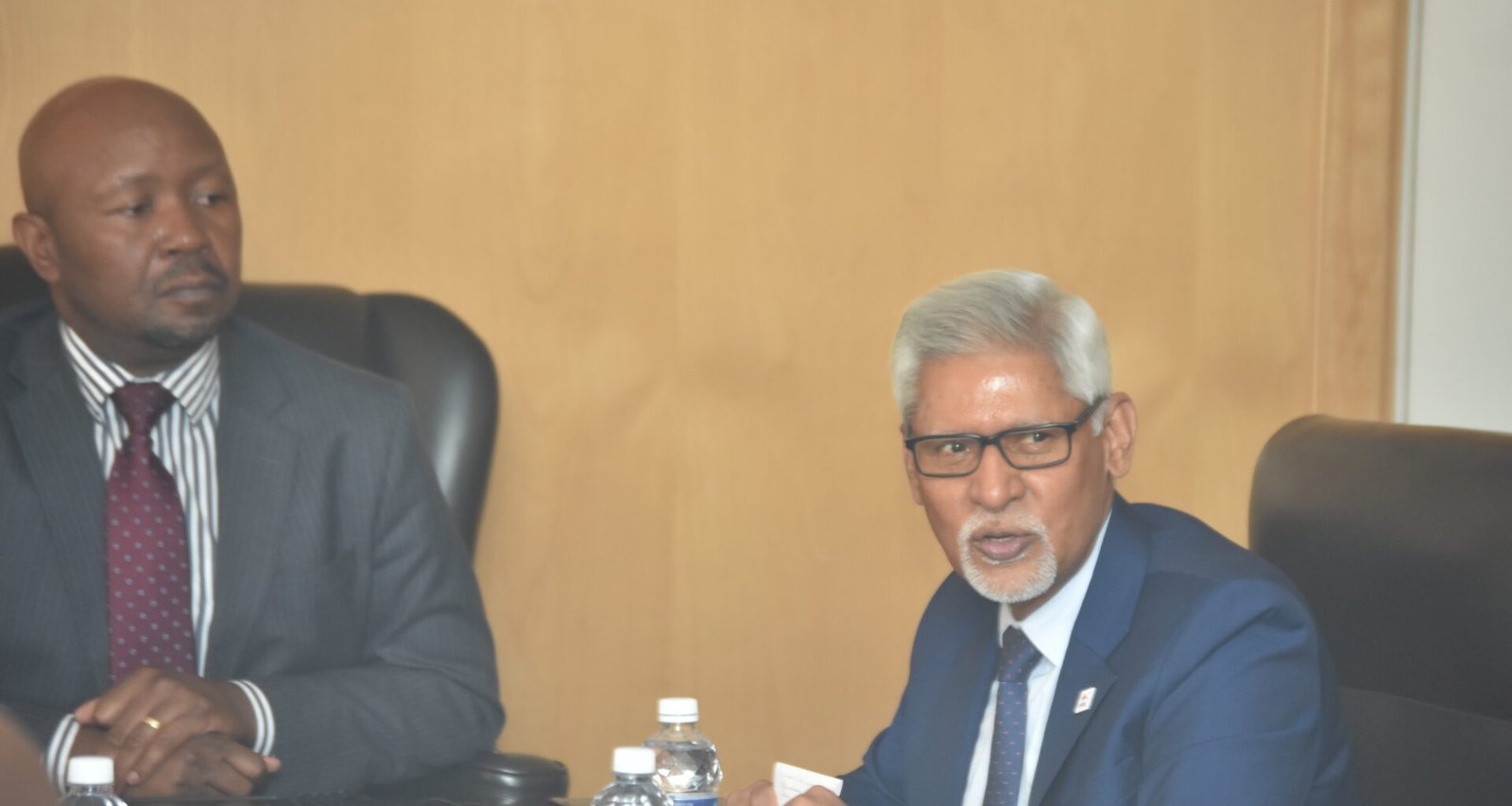
Jagan Chapagain, Secretary General of the International Federation of Red Cross and Red Crescent Societies (IFRC), sat down with senior ministry officials on Monday carrying two commitments: more emergency funding for Zimbabweans returning home from South Africa, and a renewed push to fuse climate action with public health planning.
Both, he made clear, are urgent for the same reason — what happens outside a health system’s control can just as easily determine what happens inside it.
A Return Home, Managed or Not
Thousands of Zimbabweans have been making their way back from South Africa in recent months, a movement Chapagain described as one of the organisation’s top priorities in the country. The concern isn’t the return itself — it’s what happens if it isn’t planned for.
“We are trying to scale up our support for Zimbabweans returning to the country, mostly from South Africa,” Chapagain said. “We released the first batch of emergency funding and have now increased those funds to support people returning, because if they cannot be received well, it also adds to the health burden in the country.”
It’s a lesson drawn from experience elsewhere, he noted. Repatriation that isn’t systematically managed doesn’t just strain border posts and transit centres — it ripples straight into hospitals and clinics.
“Our experience has shown that if returns are not managed in a systematic way, the burden on the health system becomes significant,” Chapagain said. “Managing the process from the beginning helps reduce that pressure.”
For the Ministry, that pressure has a very specific face: returnees living with chronic illnesses who risk falling out of treatment altogether. Health and Child Care Secretary Dr Aspect Maunganidze said government is taking a whole-of-government approach to ensure these Zimbabweans are reintegrated into the health system without interruption to their care — a quiet but critical piece of the puzzle as numbers grow.
Closing the Gap Between Climate and Health
If repatriation was the immediate concern on the agenda, climate change was the longer horizon — and arguably the harder problem to solve.
Chapagain used the visit to press for closer collaboration between IFRC and Zimbabwe on an issue he says the global health and humanitarian community talks about constantly, but has struggled to act on.
“One area where we are working is linking climate and health,” he said. “Although everyone recognises the connection, there are still very few practical programmes globally that bring the two together.”
That gap — between recognising a problem and funding a solution for it — is exactly what IFRC is now trying to close, partly through its work with the Green Climate Fund to design bankable, concrete programmes rather than broad statements of intent.
“We have been working with the Green Climate Fund to develop concrete programmes that can attract funding,” Chapagain said. “This presents an important opportunity for collaboration here in Zimbabwe, and discussions on a proposal are already underway.”
For a country where erratic rainfall, prolonged dry spells and cyclone damage already ripple into disease outbreaks, food insecurity and disrupted health services, that proposal could matter well beyond a single funding line.
A Partnership Built Over Time
None of this arrives out of nowhere. Dr Maunganidze was quick to frame the visit within a much longer relationship between government and the Red Cross movement — one built through years of community health work, emergency response and disease prevention.
“The Ministry and the Government appreciate the long-standing support of the IFRC and the Zimbabwe Red Cross Society, particularly in community health, humanitarian assistance, emergency preparedness and response, health promotion and disease prevention,” he said. “This work has consistently complemented Government efforts in supporting vulnerable communities.”
That track record is now shaping the next phase of collaboration too. Dr Maunganidze pointed to Gavi 6.0 — the latest phase of the global vaccine alliance’s support — as a priority area, particularly for expanding immunisation coverage in underserved communities.
“As we implement the National Health Strategy and advance universal health coverage, we value strong partnerships such as the one we have with the IFRC,” he said. “We acknowledge the Zimbabwe Red Cross Society’s extensive community reach and experience in supporting immunisation demand generation, addressing vaccine hesitancy and improving access to hard-to-reach populations. Beyond project delivery, the society can also serve as a strategic partner in strengthening immunisation systems.”
What Comes Next
Chapagain’s stop at the Ministry was one leg of a broader itinerary that included courtesy calls on President Emmerson Mnangagwa and the Ministry of Local Government, as well as visits to Zimbabwe Red Cross Society centres around the country.
Taken together, the visit signals something more than a diplomatic courtesy tour. It points to a partnership trying to work on two timelines at once — responding to the immediate pressure of returnees today, while laying groundwork for a climate-health financing model that could take years to mature.
Whether that model becomes a template other countries can borrow from may depend on how quickly the “concrete programmes” Chapagain referenced move from discussion to disbursement.