
By Kirsty Chibovero,
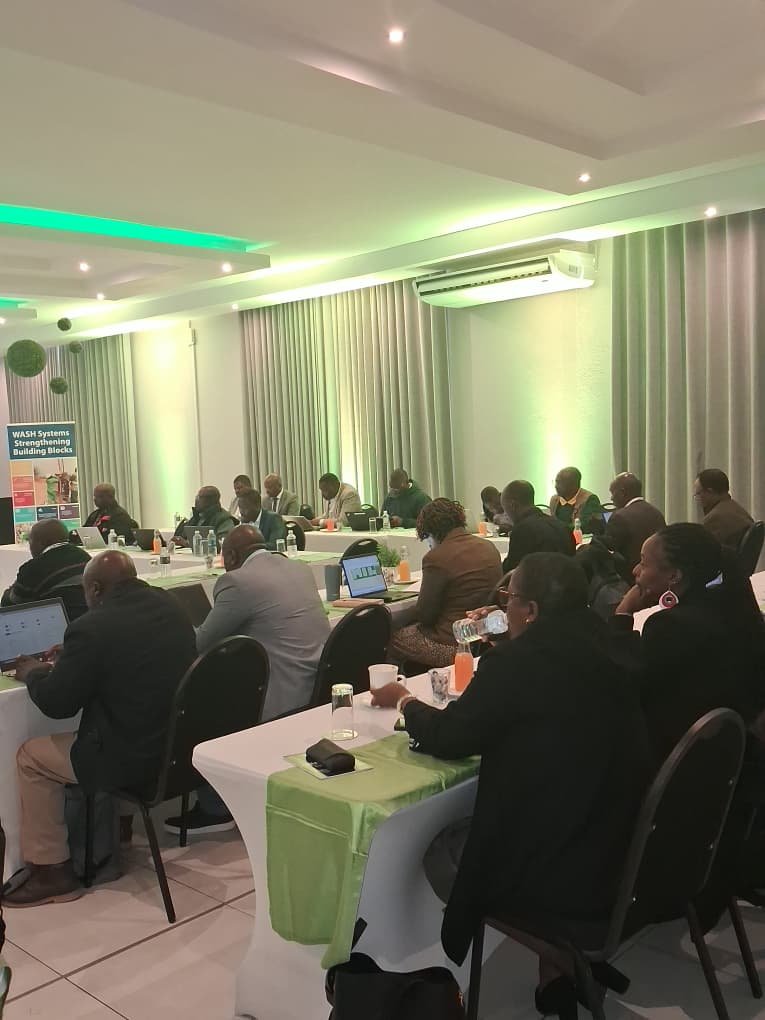
HARARE, August 18, 2026 — Government has initiated a major review of the Community-Based Management (CBM) framework for rural water supply infrastructure, aiming to adapt to technological advancements and strengthen local ownership of water points.
Speaking at the CBM Validation Workshop in Harare, Tuesday, Chief Director for the Department of Water, Irrigation and WASH Coordination, Engineer Tinayeshe Mutazu, highlighted that the strategy review comes 21 years after Zimbabwe adopted the CBM model in 2005. According to Eng Mutazu, the original 2005 framework replaced an unsustainable three-tier maintenance system managed by sub-national government structures, primarily under the District Development Fund (DDF) where pump minders, supervisors, and operators were responsible for repairs.
“We realized that this was not sustainable because ownership then was limited, and this is when we adopted the Community-Based Management system,” Eng Mutazu explained. “In the last 20 years, we have been using it, but with limited success”.
“The review seeks to address evolving challenges over the past two decades, including climate variability and technological shifts such as the widespread deployment of solar-powered water systems and Village Business Units (VBUs). These modern infrastructures supply water for drinking, sanitation, hygiene, and local livelihoods,” he added.
Eng Mutazu emphasized that under the Second Republic, the government’s core objective is to move away from the perception that rural water points are donor- or government-owned, shifting full operational control to local communities.
“Our thrust is to capacitate communities, to make them own and realize that it is them who benefit on a daily basis from the water infrastructure government is putting up,” he said.
Under the updated strategy, communities will receive training and essential toolkits including spanners and lubricants to handle routine maintenance like basic repairs, tightening loose bolts, and ensuring sanitation around water sources. Higher-level technical officers will only intervene in the event of major system breakdowns.
The validation workshop marks a key step toward establishing a more resilient, self-sustaining framework for rural water management across the country.