



By Kirsty Chibovero
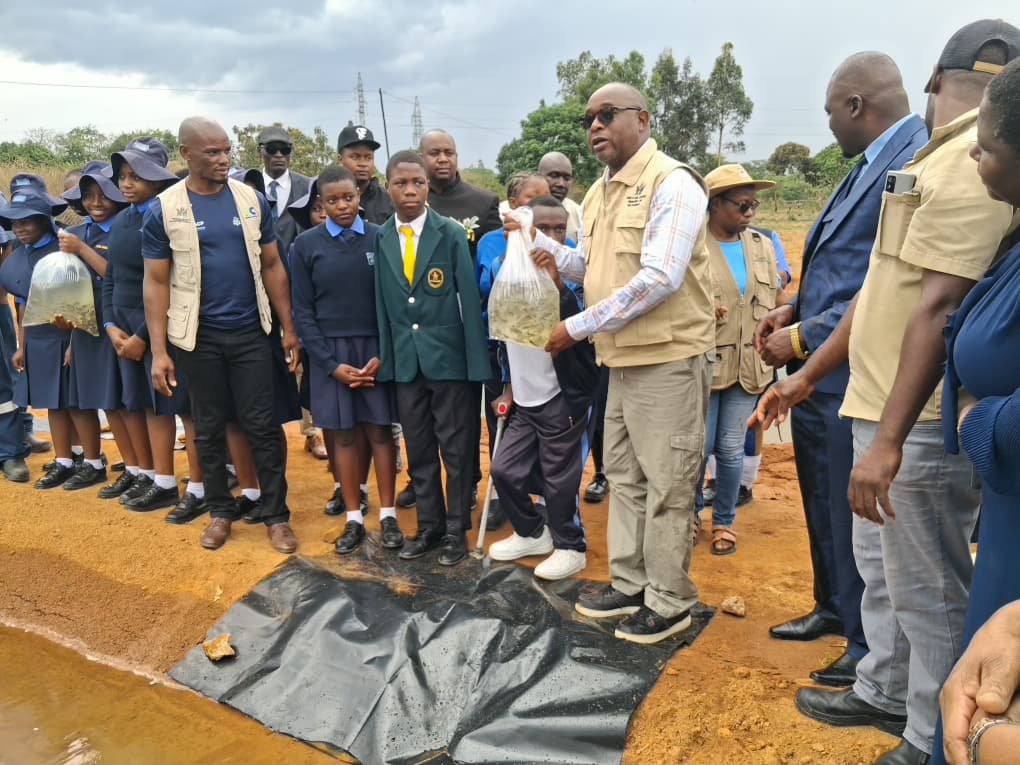
At the Danhiko Vocational Centre, an atmosphere of hope and practical empowerment filled the air as the institution officially commissioned its new fisheries project. The initiative marks a significant milestone in making aquaculture accessible to students with disabilities, blending vocational training with commercial agricultural production.
Deputy Minister of Agriculture, Mechanisation and Water Resources Development, Davis Marapira, officiated the launch by stocking the centre’s three newly constructed fish ponds. In his address, he emphasised the collaborative effort behind the milestone, noting that the project demonstrates what can be achieved “when government, the private sector, development partners and communities come together around a common vision of empowerment, inclusivity and economic development.”
Bridging Inclusion and Industry
Implemented by Netfusion (Private) Limited in partnership with the Ministry’s Livestock and Fisheries Production Department, the project provides comprehensive infrastructure and training tailored for inclusive growth. The scope of work features:
- Complete fencing of the aquaculture site
- Construction of three professional fish ponds
- Provision of high-quality fingerlings and complete feed packages
- Specialised aquaculture training for 178 staff members and students
 Highlighting the broader developmental goals, Marapira stated, “This intervention is not merely about fish production. It is about skills development, empowerment, nutrition, income generation and the creation of future entrepreneurs.”
He further commended Netfusion for demonstrating that “disability is not inability,” framing the partnership as a true manifestation of Ubuntu—where successful enterprises invest directly in projects that uplift the community.
Riding a Wave of National Aquaculture Growth
The launch coincides with a period of remarkable momentum for Zimbabwe’s fisheries sector. National production has climbed from 27,791 metric tonnes in the 2020/21 season to 33,710 metric tonnes in the 2025/26 season—representing an increase of more than 20 percent. Meanwhile, fingerling production capacity has nearly doubled to reach nearly 25 million.
This rapid expansion recently earned Zimbabwe international recognition from the Malabo Montpellier Forum as one of the fastest-growing aquaculture sectors on the continent.
Despite these strides, domestic demand continues to outpace supply. Zimbabwe requires approximately 60,000 metric tonnes of fish annually, leaving a deficit of roughly 26,000 metric tonnes. Projects like Danhiko are expected to play a vital role in closing this gap, reinforcing national food security, and reducing reliance on fish imports.
Looking Ahead: Education 5.0 and Climate Resilience
Aligning with the national Education 5.0 framework—which prioritises innovation, industrialisation, and hands-on skills—the fisheries project also advances the Ministry’s target of establishing 40 school business units by the end of 2026.
To bolster Danhiko’s long-term sustainability, Deputy Minister Marapira announced plans to sink an additional borehole at the centre and establish a one-hectare, solar-powered, drip-irrigated school business unit, a plan formulated in consultation with Milton Makumbe, Director of Livestock and Fisheries.
At the same time, authorities are keeping a watchful eye on environmental factors. Marapira issued a warning that Zimbabwe is forecast to experience medium to strong El Niño conditions during the 2026/27 season, bringing potential risks of below-normal rainfall, elevated temperatures, and strain on water resources.
Under the government’s drought mitigation strategy, which incorporates a dedicated livestock and fisheries pillar, farmers are being equipped with climate-smart practices, seasonal advisories, and targeted extension support. The Deputy Minister urged Danhiko and other aquaculture producers to collaborate closely with provincial agricultural advisory officers to formulate robust drought preparedness plans.
Marapira called on broader aquaculture value chain players to open doors for persons living with disabilities, while challenging Danhiko’s leadership to sustain and scale the initiative.
“Let this not be the end,” he urged, “but rather the beginning of a much larger and more impactful program.”


